
Table of Contents
ToggleHow to Create a Quit Smoking Plan That Works
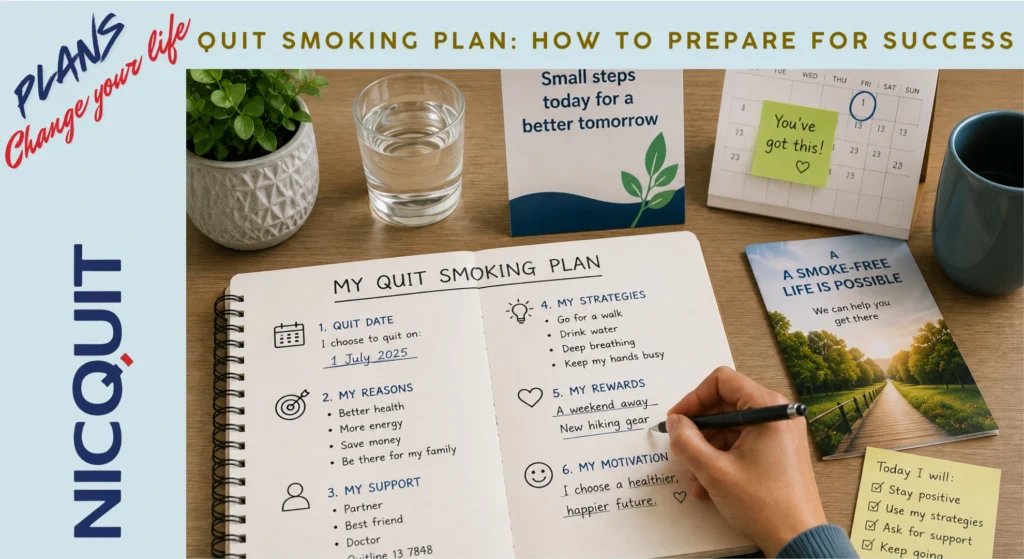
Quitting smoking can feel overwhelming. However, having a structured quit smoking plan can make the process more manageable and improve your chances of success.
Research consistently shows that planning helps people prepare for cravings, identify triggers, and access support when they need it most. While there is no single approach that works for everyone, a personalised plan can help you stay focused on your goal of becoming smoke-free.
Why a Quit Smoking Plan Matters
A quit smoking plan gives you a clear roadmap. Instead of relying on willpower alone, you can prepare for situations that may make quitting more difficult.
Furthermore, a written plan can help you track progress and celebrate milestones along the way.
Step 1: Choose Your Quit Date
Select a realistic date within the next few weeks.
Many people find it helpful to choose a day that is not associated with major stress or social events. Once you have chosen your quit date, write it down and treat it as an important commitment.
Step 2: Identify Your Smoking Triggers
Triggers are situations, emotions, or routines that make you want to smoke.
Common examples include:
- Drinking coffee
- Feeling stressed
- Social gatherings
- Taking work breaks
- Driving
By identifying your triggers early, you can develop strategies to manage them.
Step 3: Build a Support Network
Support can play an important role when quitting smoking.
Consider talking to:
- Family members
- Friends
- Healthcare professionals
- Pharmacists
- Quit-smoking support services
In addition, sharing your goal with others may help increase accountability and encouragement.
Step 4: Prepare for Cravings
Cravings are a normal part of quitting.
Many people find it helpful to:
- Go for a short walk
- Drink water
- Practise deep breathing
- Keep their hands busy
- Distract themselves with another activity
Remember that cravings usually pass with time.
Step 5: Review Available Support Options
Australia offers a range of smoking cessation support services.
Healthcare professionals can discuss evidence-based options that may be suitable for your circumstances. Before starting any treatment, seek professional advice to determine what is appropriate for you.
What to Do If You Slip Up
A setback does not mean failure.
Many people make multiple quit attempts before quitting successfully. Instead of giving up, review what happened and adjust your plan.
Every quit attempt can provide valuable experience and insight.
Moving Forward
Creating a quit smoking plan is one of the most practical steps you can take toward becoming smoke-free.
Although quitting may be challenging, support is available. With preparation, persistence, and the right assistance, many Australians have successfully quit smoking and improved their long-term health.
Additional Resources
- Australian Department of Health and Aged Care
- Quitline Australia
- Your GP or healthcare provider
- Local pharmacists
Written and published by NicQuit.com.au — helping Australians breathe easier, live longer, and quit for good.