
Varenicline and Cytisinicline: New UK Quit Support
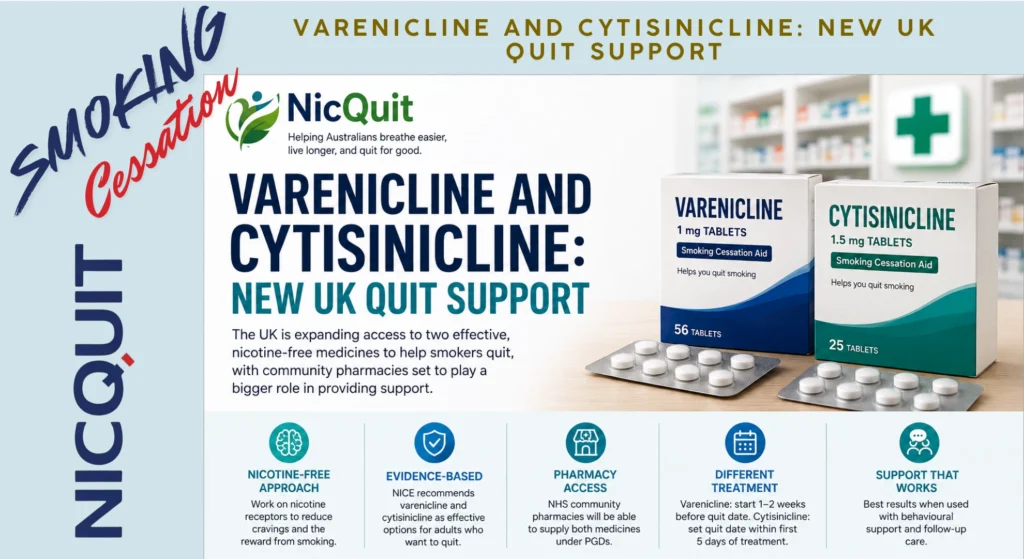
Varenicline and Cytisinicline: New UK Quit Support Varenicline and cytisinicline are becoming increasingly important in the UK’s approach to smoking cessation, with both medicines now recognised by NICE as effective options for adults who want to quit smoking. The latest development is the planned expansion of NHS community pharmacy services to include dedicated Patient Group Directions (PGDs) for both medicines, potentially making evidence-based quit support more accessible. What are varenicline and cytisinicline? Both medicines are nicotine-free treatments that work on nicotine receptors in the brain. Rather than supplying nicotine, they help reduce cravings and make smoking less rewarding.Varenicline has been used internationally for many years and was previously available in the UK as Champix. Its return to the UK market has renewed interest in prescription medicines that directly target nicotine dependence.Cytisinicline, sometimes called cytisine, is a newer option in the UK. Although cytisine has been used for decades in parts of Europe, it only became available in the UK as a medicinally licensed smoking cessation product in 2024. What has changed in the UK? In February 2025, NICE updated its tobacco-dependence guidance after reviewing the evidence for cytisinicline. The updated guidance places cytisinicline alongside varenicline, nicotine replacement therapy (NRT) and other licensed treatments as options for adults who smoke and want to quit.NICE recommends that these treatments be used alongside behavioural support. Evidence reviewed by NICE found that cytisinicline was more effective than placebo or NRT, while no clear difference in effectiveness was identified between cytisinicline and varenicline.The evidence review also found strong evidence supporting varenicline and cytisine as effective smoking cessation treatments. A large network meta-analysis included hundreds of studies and found both medicines were associated with higher long-term quit rates than placebo. Why are community pharmacies important? The biggest development in 2026 is the NHS Community Pharmacy Smoking Cessation Service.In May 2026, NHS Business Services Authority announced that the service specification had been updated to include planned Patient Group Directions for varenicline and cytisinicline. PGDs can allow appropriately authorised healthcare professionals to supply specified medicines to eligible patients without requiring an individual prescription for every supply.A national varenicline PGD template was also published by the NHS Specialist Pharmacy Service in January 2026, helping pharmacies implement a consistent approach to supplying the medicine.This could make community pharmacies an increasingly important part of smoking cessation care. Instead of relying solely on a GP appointment, eligible smokers may be able to access assessment, behavioural support and medication through participating pharmacy services. How are the two treatments used? The treatment schedules are different.With varenicline, treatment is generally started before the planned quit date. NICE recommends starting it one to two weeks before the quit date, allowing the medicine to build up before smoking stops.With cytisinicline, the quit date is agreed within the first five days of treatment. The standard treatment course is considerably shorter than the traditional varenicline course, with a standard duration of around 25 days.Neither treatment should be viewed as a substitute for personalised medical advice. NICE recommends considering a person’s preferences, health, other medicines, contraindications and potential adverse effects when choosing a smoking cessation treatment. Are they suitable for everyone? No. These are prescription medicines and require appropriate clinical assessment.NICE states that varenicline and cytisinicline should not be offered to people under 18. Cytisinicline should also not be offered to people aged 66 or over under the current NICE recommendations. Neither medicine should be offered during pregnancy or breastfeeding.Side effects can also occur. Cytisinicline has been associated with symptoms such as nausea and insomnia, while nausea has also been reported with varenicline. The differences observed in the evidence were generally small, but healthcare professionals should still consider individual circumstances when recommending treatment. What does this mean for people trying to quit? The UK is moving towards a broader range of evidence-based smoking cessation options. For smokers who want to stop, that means quitting no longer has to rely on willpower alone.Varenicline and cytisinicline provide nicotine-free approaches that can help manage cravings and reduce the rewarding effects of cigarettes. When combined with behavioural support, they give smokers another evidence-based pathway towards becoming smoke free.The growing role of community pharmacies could also make professional quit support easier to access. For anyone considering these medicines, the best starting point is to speak with a qualified healthcare professional or smoking cessation service about which treatment is appropriate. Sources and further reading NICE: Tobacco: preventing uptake, promoting quitting and treating dependence — updated February 2025. NICE: Evidence and surveillance review of cytisinicline and other smoking cessation treatments. NHS Business Services Authority: May 2026 update on the NHS Community Pharmacy Smoking Cessation Service. NHS Specialist Pharmacy Service: National varenicline Patient Group Direction template. Why NicQuit? Treatment Options FAQs Written and published by NicQuit.com.au — helping Australians breathe easier, live longer, and quit for good.Copyright ©
Varenicline and Cytisinicline: New UK Quit Support Read More »